Orientation leads
Bring realistic wound-care documentation into orientation with ready-to-use simulated cases, answer keys, and a one-page guide for the facilitator.
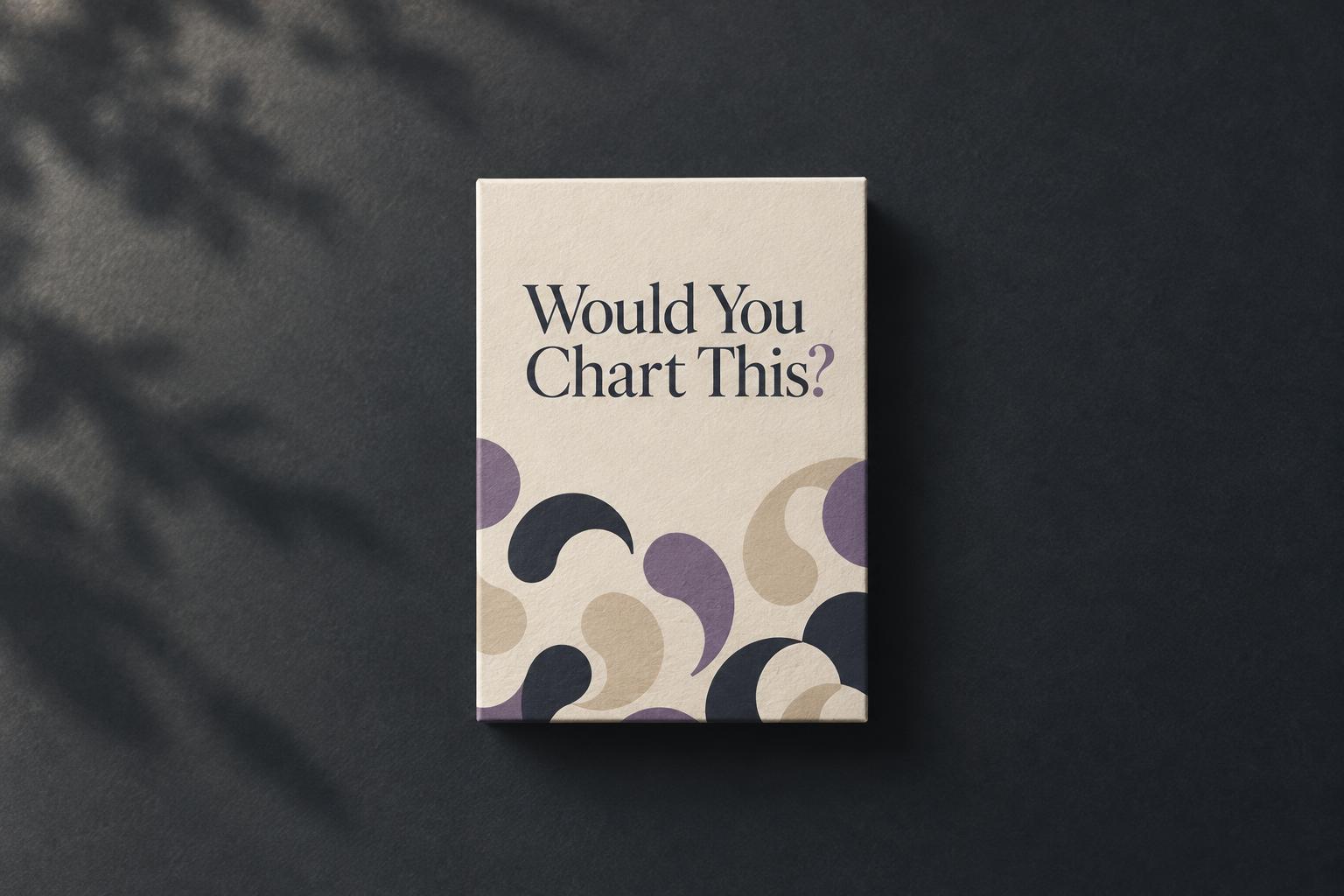
 Would You Chart This?”
For home-health education
Quick, realistic wound-care practice for home-health nurses, with ready-to-use materials for small agencies running orientation, skills days, and documentation remediation.
$49Wound Documentation Challenge Pack
Made for
Bring realistic wound-care documentation into orientation with ready-to-use simulated cases, answer keys, and a one-page guide for the facilitator.
Give home-health nurses a focused wound-documentation exercise for skills days, using simulated cases and the included keys to review responses.
Use common charting mistakes as a starting point for documentation remediation, with realistic simulated cases to read, question, and discuss.
Read it again
Common charting mistakes make useful practice: read a simulated note and ask what is missing.
Imagine you are the next nurse reading this simulated note. What would you need it to tell you? Pause, consider what is missing, then compare with a stronger note.
Inside the pack
A focused set of practice materials for small agencies teaching home-health nurses about wound documentation.
Work through 10 simulated cases that bring realistic wound-care documentation into practice, with material for orientation, skills days, and remediation.
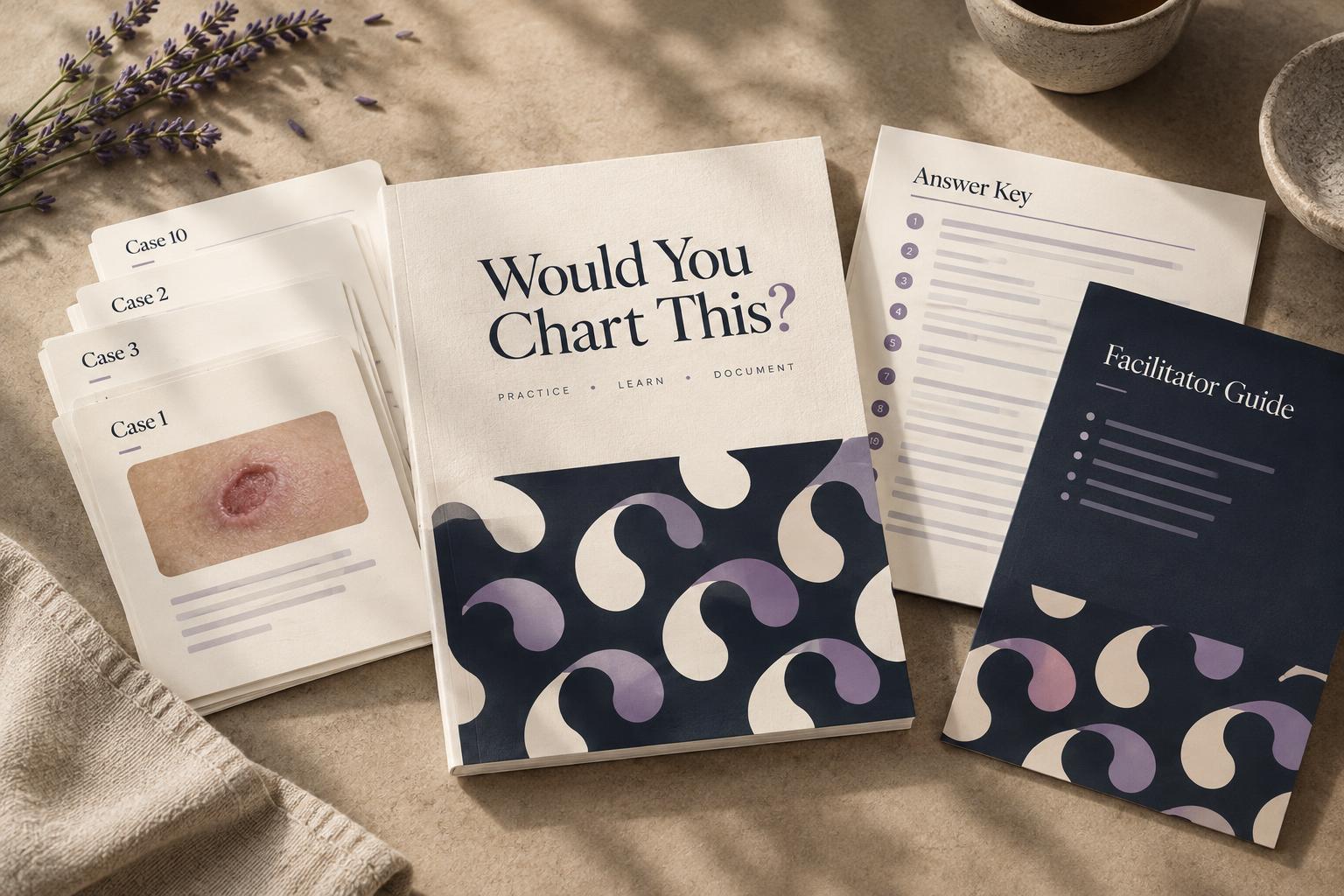
Use the included answer keys to review responses to the simulated cases and keep the discussion focused on wound documentation.
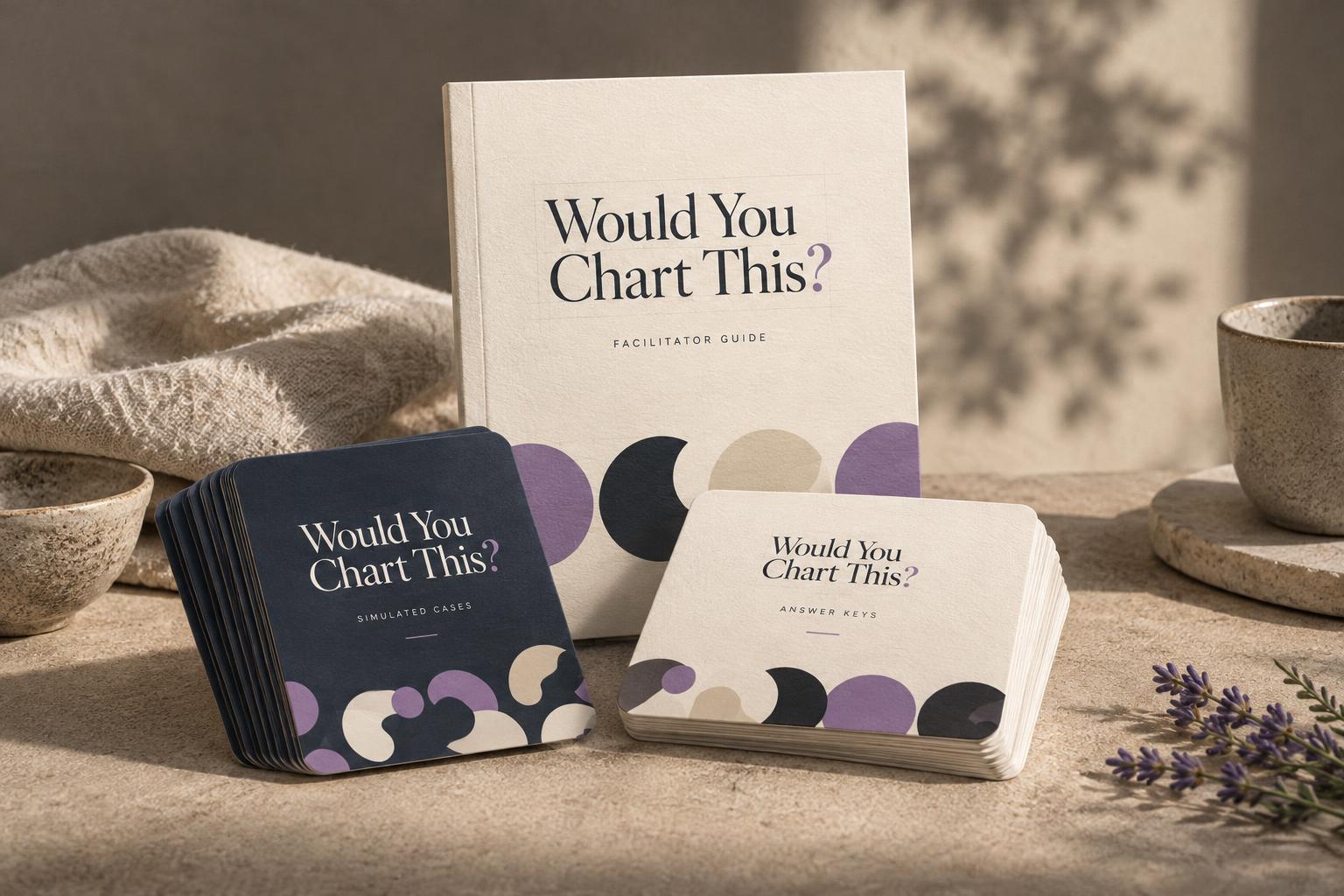
A one-page facilitator guide accompanies the cases and keys, bringing the practice materials together for small agencies with education to deliver.

The practice
Read. Pause. Consider a stronger note.
Start with a simulated wound-care note. Read it as the nurse who will see the patient next.
Ask what you would need the note to tell you. Consider which details are missing before reviewing an answer.
Review the answer key and consider the stronger note. Use the differences as a starting point for discussion.
Before you begin
A few practical details about the cases, the included materials, and where this practice fits.
The pack contains 10 simulated cases, answer keys, and a one-page facilitator guide for wound-documentation practice.
It is designed for home-health nurses, with ready-to-use education for small agencies planning orientation, skills days, or documentation remediation.
The 10 cases are simulated. They offer realistic wound-care practice without presenting the exercises as real patient records.
Use the cases for orientation, skills days, or documentation remediation: the three education settings this pack is designed to support.
Yes. Answer keys are included alongside the simulated cases, so the practice comes with material to review responses.
The pack includes a one-page facilitator guide, alongside the cases and answer keys, for ready-to-use education in small agencies.
Your next session
Bring realistic wound-documentation practice to orientation, skills days, or remediation, with cases, answer keys, and a facilitator guide together.
Ten simulated cases. One clear focus.A note from Isaac
A simulated note says, “Wound looks better.” What would you need it to tell you?
That question is the starting point: notice what is missing, then consider a stronger note.
The focus is quick, realistic wound-care practice for home-health nurses, built around common charting mistakes.
For small agencies, the pack brings together cases, answer keys, and a one-page facilitator guide.
Use it for orientation, skills days, or documentation remediation. Keep the conversation focused on what the next nurse needs.

IsaacBusiness owner